Controlled Heat. Confident Cooling Validation.
Heater resistors for AI, cryptocurrency mining and data-center cooling validation — plus laboratory, electronics and custom thermal applications.
Real Heat. Before Real Hardware.
Validate the cooling equipment before server clusters are installed. A thermal test vehicle (TTV) uses controlled heat sources to represent the thermal load of a processor or server. Integrated into a suitable test assembly, CGI thick-film heater resistors provide the electrical-to-thermal conversion at the heart of that process.
From AI training and inference to cryptocurrency mining, scientific computing and everyday cloud services, digital infrastructure depends on reliable heat removal. CGI heater resistors are building blocks for engineered test assemblies that let teams apply controlled thermal loads while developing and validating that cooling infrastructure.
Apply a known heat load. Measure temperature and coolant flow. Evaluate how the cooling system responds — without needing production CPUs or GPUs to generate the heat.
Discuss TTV Heater Requirements
Test the Cooling. Before the Compute.
An appropriately designed resistive load lets engineers evaluate heat removal for the equipment, operating conditions and cooling architecture they plan to deploy.
Cold Plates & Interfaces
Use a controlled heat input to compare cold-plate performance and thermal interfaces at defined coolant conditions.
Cooling Loops & CDUs
Combine instrumented test assemblies to evaluate heat removal, flow distribution and response to changing loads.
Pre-Installation Testing
Use a suitably engineered load system to exercise cooling infrastructure before valuable compute equipment arrives.
Different Workloads. The Same Need to Prove the Cooling.
Data centers power far more than one type of server. Heater-based test assemblies support cooling evaluation across the full range of deployed infrastructure.
AI Training & Inference
GPU and accelerator clusters support model training, generative AI and real-time inference. Heater-based TTVs can provide controlled thermal inputs for evaluating cold plates, thermal interfaces and coolant loops before production accelerators are available.
ASIC & Mining Infrastructure
Mining equipment creates sustained heat loads that its cooling system must remove. Purpose-built resistive test assemblies can support evaluation of heat-removal capacity for air-cooled, liquid-cooled or immersion-cooled installations.
Shared Computing Infrastructure
Cloud platforms and colocation facilities host virtual machines, business software and mixed customer workloads. Engineered load assemblies allow teams to apply planned heat loads and evaluate cooling response as density and occupancy change.
Research, Simulation & Rendering
Scientific modeling, engineering simulation, weather analysis and digital rendering use powerful CPU and GPU systems. Controlled heater loads help researchers compare cooling designs and assess steady-state and transient temperatures.
The Services Businesses Rely On
Databases, financial systems, healthcare IT, e-commerce, backup and content delivery all rely on computing infrastructure. Resistive thermal fixtures can support cooling development for server, storage and networking enclosures.
Compute Closer to the User
Edge servers, telecom equipment and industrial computing put processing into compact or distributed locations. Heater-based fixtures help evaluate enclosure cooling and temperature control across defined ambient conditions.
Controlled Heat. More Possibilities.
Wherever a design needs an intentional, measurable heat input, CGI can help review the component requirements.
Thermal Calibration Fixtures
Heater elements in instrumented reference fixtures for temperature-sensor evaluation and thermal measurement development. Accuracy depends on the complete fixture, sensing and control system.
Electronics Testing & Conditioning
Integrate controlled heat sources into test fixtures to apply thermal stress, study component behavior or support temperature cycling during product development.
Power Supply & Load Testing
High-power resistors can serve as electrical loads in suitably engineered power-supply and load-bank test systems, converting applied electrical power into heat the fixture must safely dissipate.
Optics & Payload Temperature Control
Heater elements for camera, sensor and other payload assemblies that need controlled warming, including UAV and aerospace applications. Select the element around temperature limits, mounting and available power.
Cooling Technology R&D
Create known heat inputs for comparing heat sinks, thermal interface materials, cold plates and experimental cooling methods under repeatable, instrumented conditions.
Custom Thermal Fixtures
Bring us an unusual footprint, resistance value or mounting requirement. Our team can review standard components and custom options for laboratory, industrial and environmental test assemblies.
Heater Elements, Built Around Your Test Fixture.
High-conductivity, electrically insulating BeO substrates. Standard and custom resistance values. Flexible footprints and in-house machining support for your thermal assembly.
- Published resistance range: 10–1000 Ω
- Standard tolerances: ±2% / ±5%
- Other values available on request
| Part family | Published power* |
|---|---|
| CCR-40 / CPR-40 | 40 W |
| CCR-230-1 / CPR-230-1 | 150 W |
| CCR-375-1B / CPR-375-1B | 330 W |
| CCR-500-1 / CPR-500-1 | 500 W |
| CCR-1000-1 / CPR-1000-1 | 1000 W |
*Published ratings assume an infinite/ideal heat sink at 100°C. They are not free-air ratings. Confirm the current datasheet, mounting, interface, temperature and derating with CGI for your assembly. Array power and heat uniformity require system-level validation.
Define the Load. Design the Thermal Path.
Bring your target operating conditions to CGI. We can help select the resistor element and review custom component requirements for your fixture.
Discuss Your Heater Application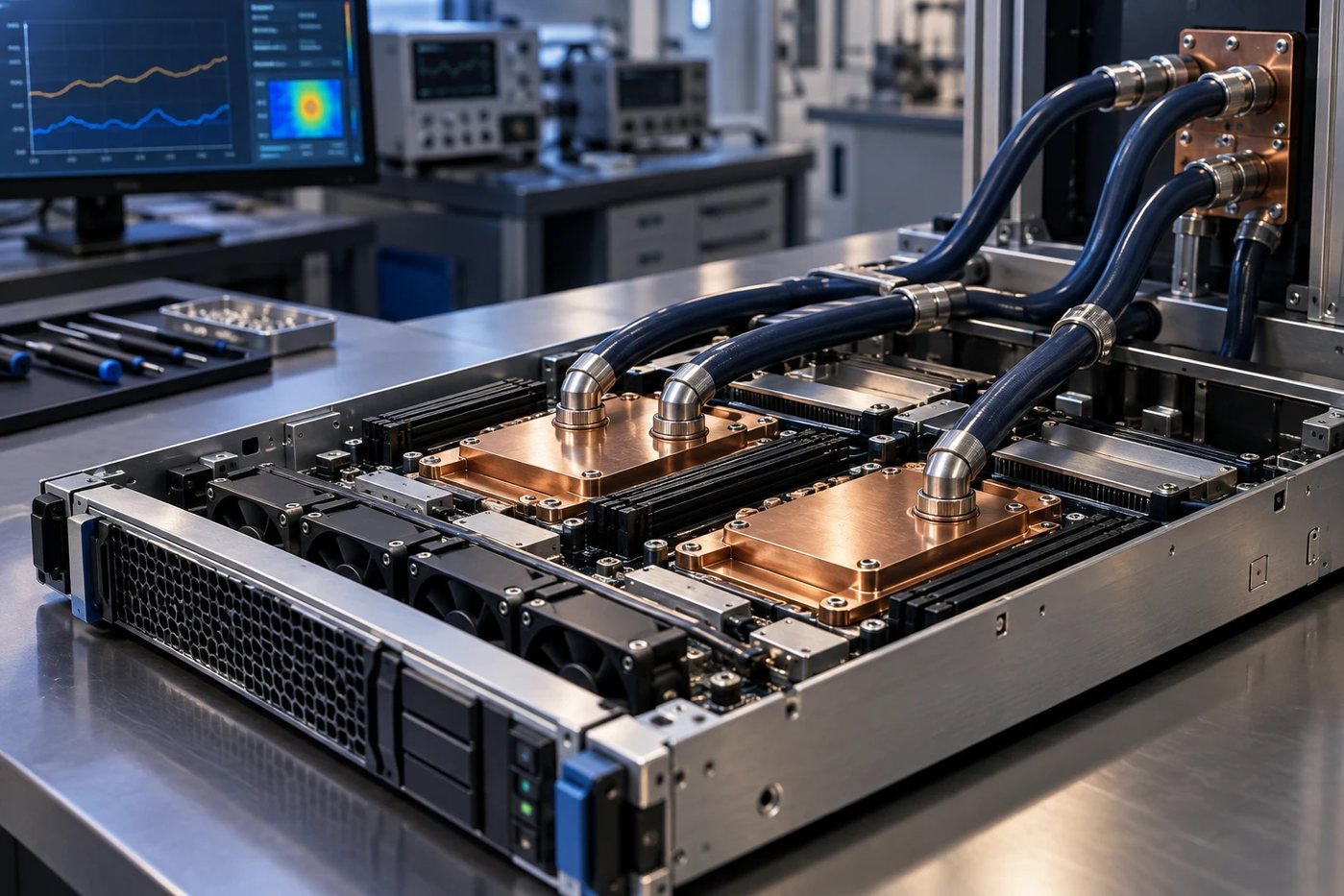
Electrical Requirements
Specify total power, voltage, resistance and load profile. Your external power controls determine how the heater load is applied and varied.
Thermal Requirements
Define heated area, target heat flux, interface conditions and temperature limits. Match the thermal stack to the device or system you intend to represent.
Mechanical Integration
Share mounting, footprint, connection and assembly requirements. Discuss standard parts, custom values and in-house machining support.
Tested for the Work Ahead.
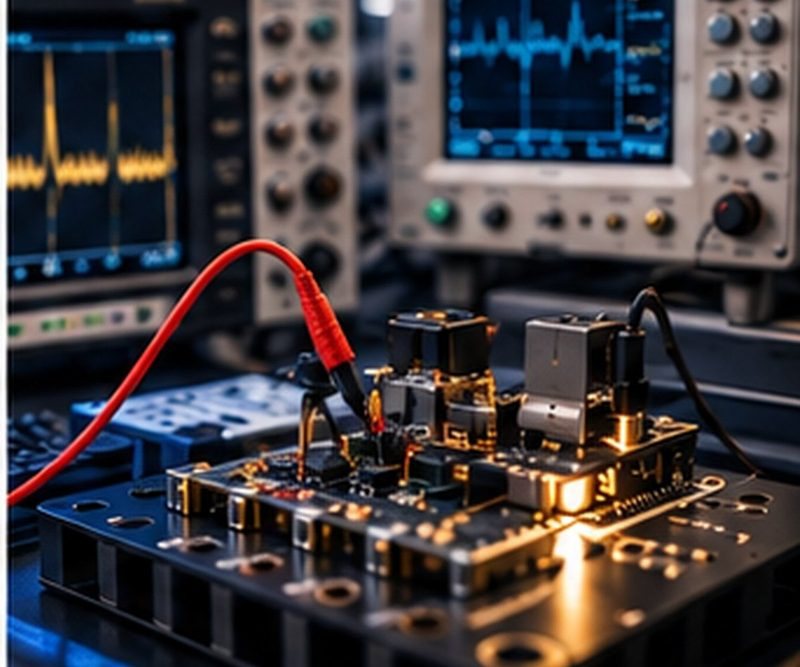
Qualification before production. Inspection throughout manufacturing. CGI's published qualification program includes power burn-in, VSWR network analysis, thermal shock, shear strength and load-life testing before a part number enters production.
All products receive 100% in-process inspection, with AQL sampling at final inspection. Ask our engineering team for the test methods, conditions and documentation applicable to your selected part.
Electrical Performance
Power burn-in and RF/VSWR analysis to characterize performance under the specified operating conditions.
Thermal & Mechanical
Thermal shock, high-temperature exposure and shear-strength testing as applicable to the part qualification program.
Long-Term Stability
Load-life and temperature-coefficient evaluation to support component selection for demanding applications.
Documented Procedures
CGI references MIL-I-45208, MIL-STD-1916, MIL-STD-45662 and MIL-Q-9858 in its quality program. Request current procedures and applicable test records.
Let's Specify Your Next Heat Source.
Share total power, heated area or target heat flux, voltage, mounting, temperature limits and quantity. Our team will help identify a heater resistor or discuss a custom component solution.
Heater / Thermal Quote Request
Our engineering team responds within one business day.